


Every year, World Alzheimer’s Day provides an opportunity to raise awareness of Alzheimer’s disease and other forms of dementia, while recognizing the millions of people living with these devastating conditions and the families supporting them.
For seniors, an Alzheimer’s diagnosis can bring a combination of emotions and concerns, from uncertainty and fear to significant changes to everyday life.
For families, a loved one receiving a diagnosis can be equally shocking and create various emotional challenges, including grief, a significant shift in family dynamics and practical issues like financial worries, caregiving duties and other complications.
Watching someone you love experience changes in their memory, personality, independence or ability to communicate can bring feelings of grief, frustration and a profound sense of helplessness.
Understanding Alzheimer’s disease and where to find appropriate support can make the journey feel less overwhelming and may help validate your experience, which is unique to each individual and family.
Speak to someone in confidence today.
We’re here to help.
Contact us today for a no-obligation conversation with one of our professionals.
Understanding Alzheimer’s Disease
Alzheimer’s disease is a progressive neurological condition that impacts an individual’s memory, thinking, behaviour and the ability to carry out everyday activities.
While memory loss is often one of the earliest symptoms, Alzheimer’s can affect people in many different ways.
For instance, someone may struggle to find the right language, become confused about familiar places, have difficulty managing routine tasks, or experience changes in mood and behaviour.
Other symptoms of Alzheimer’s disease may include forgetting recent events, conversations, or information.
As the disease progresses, memory loss can become worse and often affects a person’s ability to manage everyday tasks independently.
Complications
As it stands, there is currently no cure for Alzheimer’s disease. In the later stages, declining brain function can lead to complications such as dehydration, poor nutrition and infections.
These complications can become serious and may ultimately be life-threatening.
While there is no cure, certain medicines can help individuals manage symptoms and may slow the progression of cognitive decline in some people.
Support programs and services can also provide valuable assistance to people living with Alzheimer’s and their caregivers.
Although age is an important risk factor, dementia and Alzheimer’s are medical conditions that require proper assessment, treatment and support.
Supporting seniors and families living with Alzheimer’s
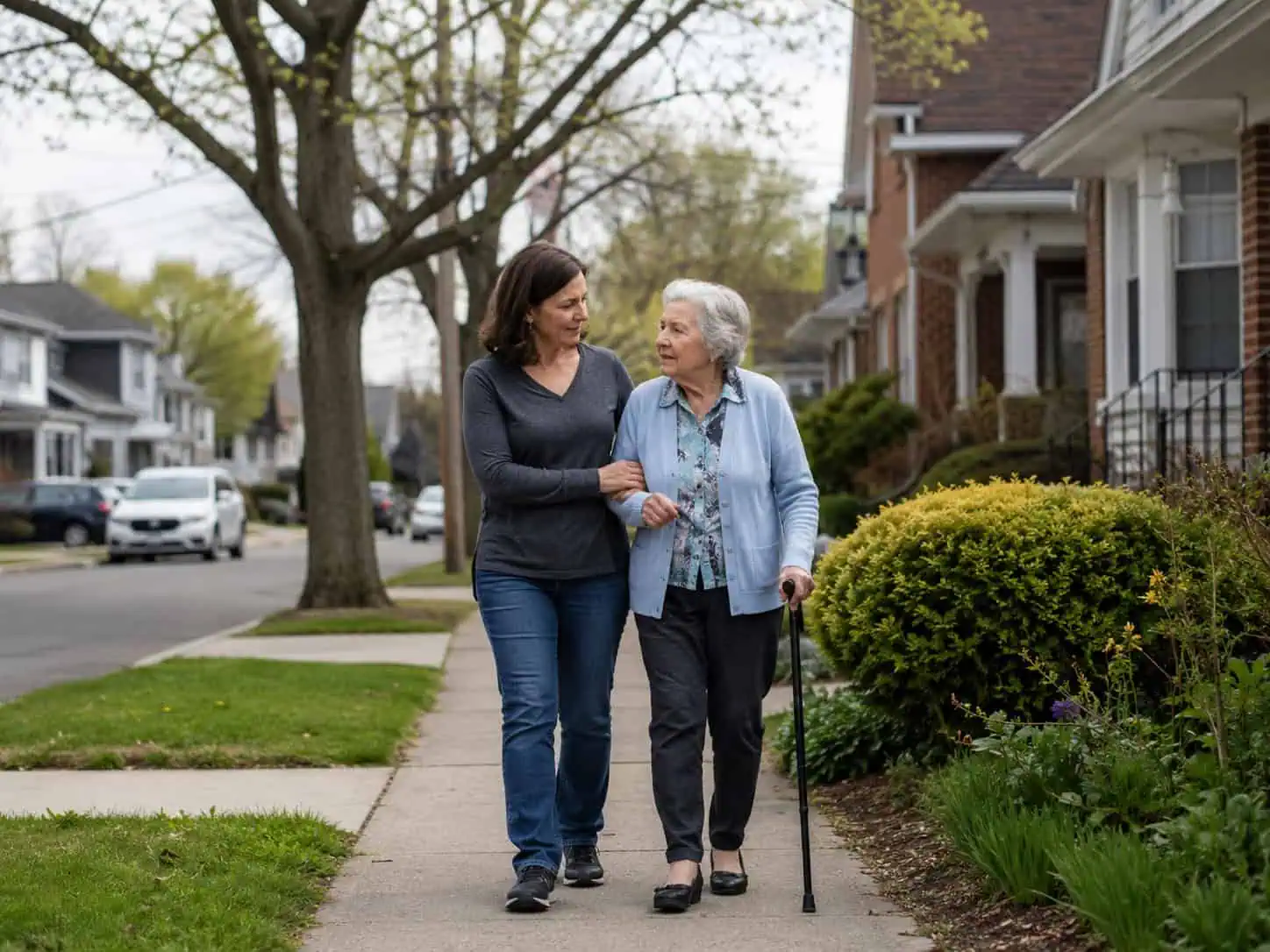
There is no single approach that works for every individual and family living with Alzheimer’s. Support should be individualized, compassionate and focused on maintaining dignity, connection and quality of life.
Some strategies that may help seniors and families include:
Maintain familiar routines
Familiarity can provide comfort, structure, and reduce confusion. Keeping regular mealtimes, activities, and daily routines can help maintain a sense of stability for both the individual and their family members.
Focus on the person, not just the condition
It’s important for families to remember that an Alzheimer’s diagnosis does not erase their loved one’s personality, characteristics, history, relationships or interests.
The individual may be battling a devastating disease, but they are still the person you love, the person who still loves you.
As difficult as it can be, it may help you and your loved one to continue talking about the things you both enjoy.
Look through photo albums, listen to favourite music, cook familiar meals, or do activities that connect you both to meaningful memories.
It’s important for families to include their loved one in activities as much as possible, as it positively impacts not only the person but the family too.
Communicate with patience
Communication can become increasingly difficult as Alzheimer’s progresses. Speaking calmly, using simple language and allowing additional time for someone to respond can all help.
Correcting every mistake may not always be necessary. In many situations, maintaining connection and reducing distress matters more than proving something is factually incorrect.
Encourage independence where possible
It can be tempting to want to take over tasks when someone you love begins struggling, but maintaining independence can support confidence and dignity.
Where appropriate, let your loved one keep doing what they can safely manage, while providing support and assistance when needed.
Look after the caregiver, too
If you are the one providing care and support to your loved one, one of the most important, and sometimes overlooked, aspects of Alzheimer’s support is recognizing and caring for your own emotional needs.
Supporting someone with dementia can be physically and emotionally draining. Many caregivers experience exhaustion, isolation, anxiety, depression or burnout.
Asking for help isn’t a sign that you aren’t coping. It is part of creating sustainable, meaningful care.
You are not alone

Alzheimer’s impacts millions of people worldwide, including highly publicized celebrities such as Glen Campbell and Charlton Heston, who both spoke publicly about their experiences with the disease.
Their openness helped raise awareness and showed that Alzheimer’s can affect people from every walk of life.
Other well-known figures, such as Estelle Getty, have also spoken out about what it feels like to live with dementia, highlighting the devastating impact of these conditions.
Their stories of living with Alzheimer’s remind us that a diagnosis does not erase a person’s identity, lived experience, achievements or capacity for connection.
Behind every diagnosis is an individual with a lifetime of experiences, relationships and memories.
The importance of professional support
Alzheimer’s disease affects more than an individual’s memory. It can affect relationships, emotional wellbeing, independence, and the entire family system.
Professional support can help families understand what they are experiencing and develop strategies for managing the practical and emotional challenges that come with progressive cognitive changes.
Depending on individual circumstances, effective support may include working with physicians, nurses, occupational therapists, social workers, psychologists, counsellors and other healthcare professionals.
Families may also benefit from caregiver support groups and community resources, which can provide practical advice and reassurance from people experiencing similar challenges.
Caring for your own emotional needs
It is completely possible to love someone with Alzheimer’s while simultaneously feeling angry, exhausted, helpless, sad, frustrated or overwhelmed.
You don’t have to feel upbeat every day.
Many families often put their own emotional needs aside because they believe their loved one’s needs should always come first. However, prolonged stress can take a significant toll on mental and physical wellbeing.
Therefore, you must make time for rest, maintain social connections, access professional support and acknowledge difficult emotions as they come up.
Essentially, self-care is an important part of caregiving, and you don’t have to navigate everything alone.
Alzheimer’s and grief
One of the more complex aspects of supporting someone with Alzheimer’s is that grief can begin long before physical death.
A family member may still be sitting beside their loved one, talking to them and sharing moments, while simultaneously grieving changes in memory, communication, personality or independence.
Anticipatory loss
There is a type of grief called anticipatory loss, which encompasses the psychological, emotional, and interpersonal processes of confronting the imminent loss of a terminally ill loved one.
This type of loss can feel profoundly confusing because the person you love is still here, just not in the same way as they were before.
You may have moments of connection, laughter, and recognition alongside moments of profound sadness, guilt, and confusion.
You may also feel a combination of relief and guilt about the impending loss, which may make you feel more confused and disoriented.
Understanding that these conflicting emotions can coexist may help you feel less guilty about what you are experiencing.
It is also possible to experience physical symptoms of grief, including:
- Exhaustion and fatigue.
- Sleep disturbances.
- Changes in appetite.
- Low immunity due to stress.
If you are experiencing symptoms of anticipatory loss, please know that you are not alone – reaching out for support can help you navigate the challenges you may be experiencing and provide you with the care and validation you deserve.
Creating a supportive environment

A supportive environment for someone living with Alzheimer’s must always prioritize familiarity, safety, dignity and meaningful connection.
Small adjustments can sometimes make everyday life easier, such as reducing unnecessary noise, keeping important belongings in familiar places, using clear signage or labels where appropriate and maintaining predictable routines.
Most importantly, and you probably don’t need to be reminded of this, your loved one is still a person first and foremost.
Their diagnosis is only one part of their story, not the whole picture. They are still them, and you are still you.
World Alzheimer’s Day: Raising awareness and reducing isolation
World Alzheimer’s Day is about more than raising awareness of the disease itself. It is also an opportunity to recognize the experiences of the people living with Alzheimer’s and the families, friends, and caregivers walking alongside them.
Greater awareness can help reduce stigma, encourage earlier conversations about support and remind families that they do not have to navigate this complex journey alone.
If you are supporting a parent, partner, grandparent, or another loved one living with Alzheimer’s, seeking support early can make a meaningful difference.
There is no perfect way to navigate Alzheimer’s.
There is only the opportunity to learn, adapt, ask for help, and
continue meeting the person behind the diagnosis with compassion, love and dignity.
The emotional impact of an Alzheimer’s diagnosis
Receiving an Alzheimer’s diagnosis can be incredibly difficult for both the individual and their loved ones.
Seniors and their families may experience a range of emotions such as anxiety, anger, depression, or fear about the future, which are common responses to an Alzheimer’s diagnosis and deserve acknowledgement.
It is also common for individuals and families to experience grief related to the changes already happening, alongside anticipatory loss about changes that may come later on.
If someone you love has been diagnosed with Alzheimer’s, you may experience different variations of anticipatory grief where you may feel like you are mourning the loss of your loved one even though they are still alive.
This type of grief can be very intense and include feelings of:
- Deep sadness.
- Fear and uncertainty about the future.
- Disorientation and confusion because the person is present and absent all at the same time.
- Anxiety about the future, as families do not know what to expect or what the future will look like.
- Loneliness – many people do not feel validated in their grief, as no one has died and therefore they do not receive the support they need from those around them.
- Stress related to caregiving challenges.
It’s important to know these feelings are completely valid and expected, given the severity of receiving such a diagnosis.
Support and treatment in Toronto, Canada
If you or someone you love is struggling with the emotional impact of Alzheimer’s or caregiving, professional support can provide a safe space to process what you are experiencing and develop healthier ways of coping.
Contact our treatment centre in Toronto today and speak with a member of our team in confidence. We are here to listen, offer guidance, and walk alongside you and your loved one through this difficult path.