


“How was school?”
“Fine.”
“What did you do?”
“Nothing.”
“Did anything interesting happen?”
“No.”
Excellent conversation. Glad we had it.
If you’re the parent of a child or teenager, you’ve probably had some version of this exchange approximately 400 times.
New school years bring plenty to do and think about. There are school supplies to buy, schedules to figure out, lunches to pack, forms to sign and sports practices to fit into an already busy week.
Parents spend a lot of time making sure their children are ready for school, but there’s another question that matters just as much as whether the backpack is packed or the homework gets done: How is my child actually doing?
That question can be difficult to answer, especially when “fine” is about as much information as you’re getting.
School brings a lot with it: academic pressure, changing friendships, extracurricular activities, bullying, social media and just the general complications of growing up. For a child who is already struggling with anxiety, depression or another mental health issue, all of that can feel like a lot.
Parents can’t remove every source of stress from their child’s life, nor should they. But they can make sure their child knows home is a place where they can talk about what’s going on.
We’re here to help.
Contact us today for a no-obligation conversation with one of our professionals.
Start with connection (don’t interrogate).
Getting beyond “fine” and “nothing” doesn’t necessarily mean asking more questions. In fact, sometimes it means asking fewer.
Children and teenagers aren’t always eager to sit down and tell you exactly what they’re thinking and feeling. That doesn’t necessarily mean they’re hiding something or don’t want a relationship with you. Sometimes they simply don’t know how to explain what they’re feeling. Other times, they don’t want every problem immediately analysed or fixed.
Connection doesn’t always happen through serious conversations across the kitchen table.
Sometimes children talk in the car, or they talk while you’re making dinner or walking the dog. They may suddenly tell you something important at 10:47 p.m. when you were approximately thirty seconds away from falling asleep.
When those moments happen, listen. You don’t have to immediately solve the problem.
If your child tells you they hate school, your first response doesn’t have to be a speech about why education matters. If they say a friend was mean to them, you don’t necessarily need to tell them what to say tomorrow.
Try curiosity first. What happened? How did that make you feel? Do you want me to help, or do you just want me to listen?
Know what’s normal, and notice what changes
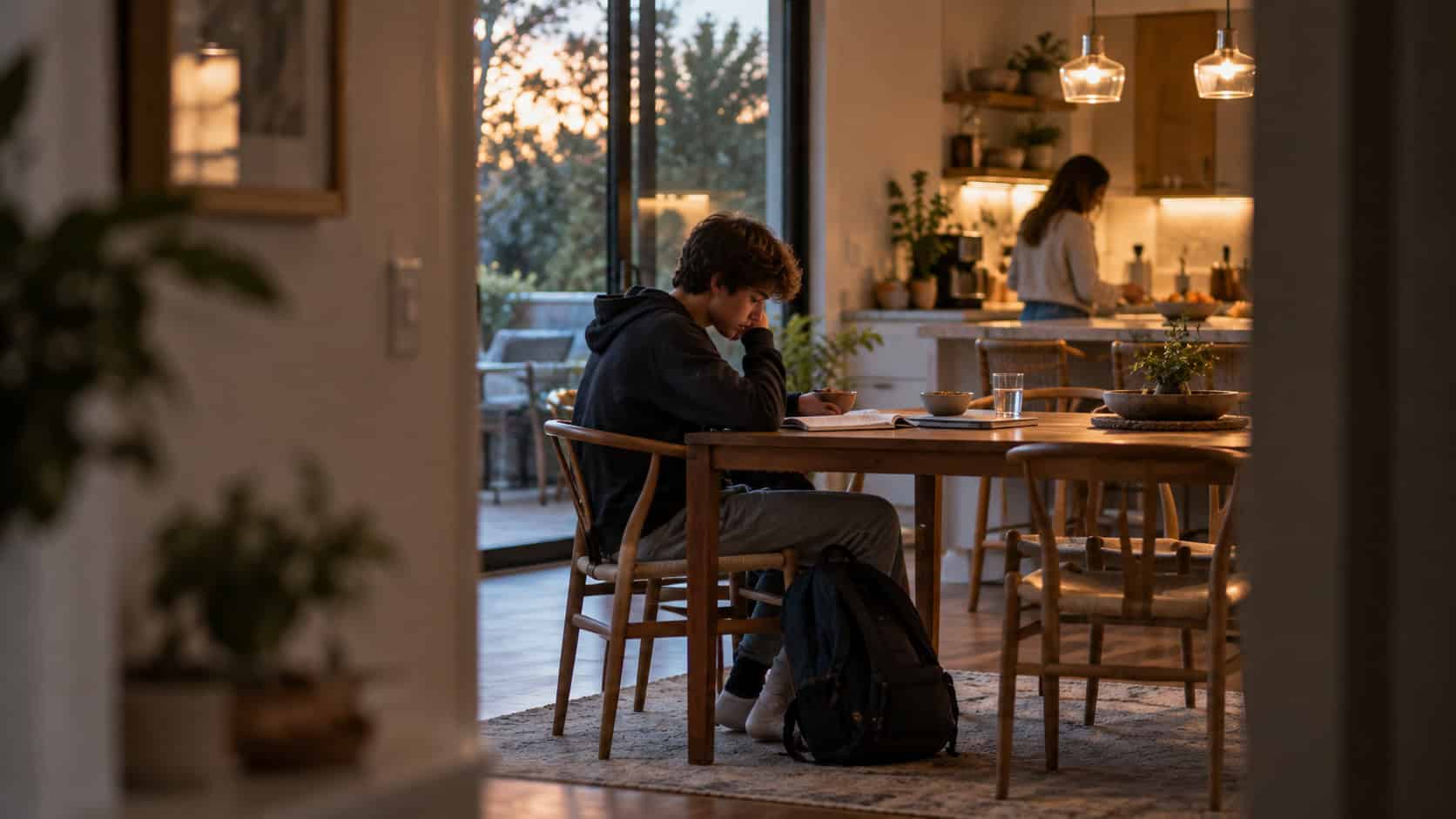
Growing up is a messy process, but not every difficult emotion or slammed bedroom door is a sign of a mental health problem. Instead of watching for one specific behaviour, pay attention to what is normal for your child and notice when something changes.
Maybe your normally social teenager suddenly stops spending time with friends. A child who usually sleeps well begins struggling to fall asleep. Your son quits the sport he has loved for years, or your daughter starts complaining about stomach aches every morning before school.
You may also notice bigger changes in eating or sleeping, persistent sadness or anxiety, more irritability than usual, declining grades, isolation or substance use.
One bad day or even one bad week doesn’t necessarily mean something is wrong. Children and teenagers are allowed to struggle sometimes. They are allowed to be sad, disappointed, angry and overwhelmed without every difficult emotion becoming a diagnosis.
What you’re looking for is a pattern. How long has this been going on? Is it getting worse? Is it interfering with school, friendships, family life or things your child normally enjoys?
Parents know their children in ways that teachers, coaches and even healthcare professionals don’t. You know what their “normal” looks like. If something feels different, pay attention to that feeling.
Don’t make grades the only measure of how they’re doing
Grades are easy to measure, but they are not necessarily a good measure of mental health.
A child can earn straight As and still be struggling. In fact, some children experiencing anxiety or perfectionism may do exceptionally well in school while privately feeling enormous pressure.
The opposite can happen, too. A sudden drop in grades may be one of the first signs that something else is going on. A student who stops turning in assignments or seems to have lost all motivation may not simply be lazy or irresponsible.
Ask about more than grades. “Who did you sit with at lunch?” “What class do you actually enjoy?” “What’s stressing you out right now?” “Is there anything happening at school that you wish adults understood better?”
A 2025 report from the Public Health Agency of Canada found that kids who feel supported by family, friends, classmates and teachers tend to have better mental health (Public Health Agency of Canada, 2025). In other words, what happens around the report card matters, too. Kids need people they trust and places where they feel like they belong.
Give them some breathing room

Kids are busy. Think about all the responsibilities they have with school, homework, sports, and clubs. Then there are family and friends. Some have part-time jobs on top of that.
Then there is the part of their lives adults sometimes forget to count: the constant stream of messages, notifications, videos and conversations happening on their phones. Even downtime isn’t always downtime anymore.
Children also need time when nothing is expected of them. They need adequate sleep, movement and time outside, and to be able to spend time with people they care about. They also need opportunities to be bored, laugh, daydream or do something simply because they enjoy it.
Sometimes supporting your child’s mental health means resisting the temptation to fill every available hour. It may also mean paying attention to what your child is telling you about their schedule. If they are constantly exhausted, overwhelmed or anxious about keeping up, something may need to give.
Their online life is part of their real life
Parents sometimes talk about children’s online lives as though they exist separately from “real life,” but for most young people that distinction doesn’t exist.
Friendships continue online after the school day ends. So do arguments, exclusion, comparison and bullying. Social media isn’t all bad. Kids talk to their friends there, find people who share their interests and sometimes find communities where they finally feel understood. But it also means the pressures of school don’t necessarily end when they come home.
A disagreement that once ended when everyone went home from school can now continue through a group chat until midnight. A child who already feels insecure can scroll through hundreds of images of other people’s lives and come away believing everyone else is happier, more attractive or having considerably more fun.
Ask what they like and don’t like about social media. Talk about comparison, privacy, bullying and what they should do if something online makes them uncomfortable or frightened. Try not to make every conversation about how many hours they’ve spent staring at a screen.
If your child’s friendships exist partly online, their emotional life exists partly online too, and that makes it worth talking about.
Know when it’s time to get help

Sometimes listening, connection, rest and support at home aren’t enough. Sometimes your child needs more help than you can give them at home.
If changes in your child’s mood or behaviour persist, become more severe or begin interfering with school, friendships, family life or everyday activities, it may be time to talk with a professional.
You might begin with your child’s family doctor, paediatrician, school counsellor or another mental health professional, and you don’t have to wait until things become unbearable before asking for help.
If your child talks about suicide, self-harm, feeling hopeless or believing that other people would be better off without them, take those statements seriously. In Canada, young people can access free, confidential support through Kids Help Phone, and anyone experiencing a suicide crisis or worried about someone else can call or text 9-8-8.
You don’t have to wait until you’ve tried everything else before asking for help. Getting support early may keep a difficult situation from becoming a crisis.
You don’t have to get everything right
One of the hardest parts of parenting is knowing that you cannot protect your child from everything. There will be difficult teachers and broken friendships. There will be rejection, anxiety, and heartbreak. Some days your child walks through the door upset and you have absolutely no idea what to say.
Your job isn’t to have the perfect response every time. Sometimes your child simply needs you to keep showing up. And when you don’t know what to do, it’s okay to say, “I don’t know how to fix this, but we’ll figure it out together.”
You don’t have to become an expert in childhood anxiety or know exactly what’s going on inside your teenager’s head. Keep talking. Pay attention when something changes. Take them seriously when they tell you something is wrong.
Maybe tonight you’ll ask how school was, and maybe the answer will still be “fine.”
Keep asking anyway.
Centres for Health & Healing is here for you.
At Centres for Health & Healing, we understand that mental health and addiction affect the entire family. If your child or someone you love is struggling, we can help you understand what is happening and determine what comes next.
Contact us today to start the conversation.
Reference:
Public Health Agency of Canada. (2025, June 23). The health of young people in Canada: Focus on mental health. Government of Canada. https://www.canada.ca/en/public-health/services/publications/science-research-data/young-people-canada-focus-mental-health.html