


Supporting 2SLGBTQI+ mental health and recovery in Canada
On 17 May 1990, the World Health Organization (WHO) declassified homosexuality as a mental illness and officially removed homosexuality from its Classification of Diseases.
The historic decision inspired the creation of the International Day Against Homophobia, Transphobia & Biphobia (IDAHOTB). The day was created to raise awareness about the discrimination and violence still faced by 2SLGBTQI+ communities internationally, while also pushing for greater safety, equality, and human rights.
Since this historic day, over 130 nations now legally permit consensual same-sex relationships, more than 35 countries recognise same-sex marriage, and several nations explicitly ban discrimination based on sexual orientation.
Canada fulfills all three of these criteria. In fact, it is globally recognised as a pioneer in 2SLGBTQI+ legal equality.
Despite the landmark moment and advanced legal frameworks, progress on paper doesn’t necessarily translate into a daily sense of safety and equality in everyday life. Major disparities remain between legislative milestones and the daily reality of 2SLGBTQI+ individuals, both globally and here in Canada.
While Canada is rightfully viewed as a progressive country for 2SLGBTQI+ rights with improved legal protections, public conversations and visibility, for many people across the country — especially those living in smaller communities or more conservative environments — being openly queer or trans can still carry a great risk.
Sometimes that risk is obvious, like being harassed, bullied, or flat-out rejected.
But often the risk is much greater than this. Hate crimes targeting sexual orientation average roughly 1.8 reported incidents per day, totaling 658 cases nationwide.
That’s 658 real people just trying to live their lives.
This number highlights the stark contrast between legal status and real-world safety, as human rights advocates and official data show.
But sometimes the greatest overall risk is the mental health aspect. It’s the day-in-day-out constant worry and overthinking.
Not correcting someone who has used the wrong pronouns because you’re exhausted and you don’t know if you’re safe.
Avoiding healthcare because you’re tired of explaining yourself yet again.
Dreading airport security because your body doesn’t match your passport photo.Learning to scan every room before speaking out.
Surveying the sidewalk before holding your partner’s hand or stealing a kiss.
Sidestepping conversations about relationships so you don’t have to out yourself.
Feeling safer hiding parts of yourself than being open and authentic.
That kind of stress accumulates over time, putting a constant strain on your nervous system and mental health.
We’re here to help.
Contact us today for a no-obligation conversation with one of our professionals.
Mental health in 2SLGBTQI+ communities
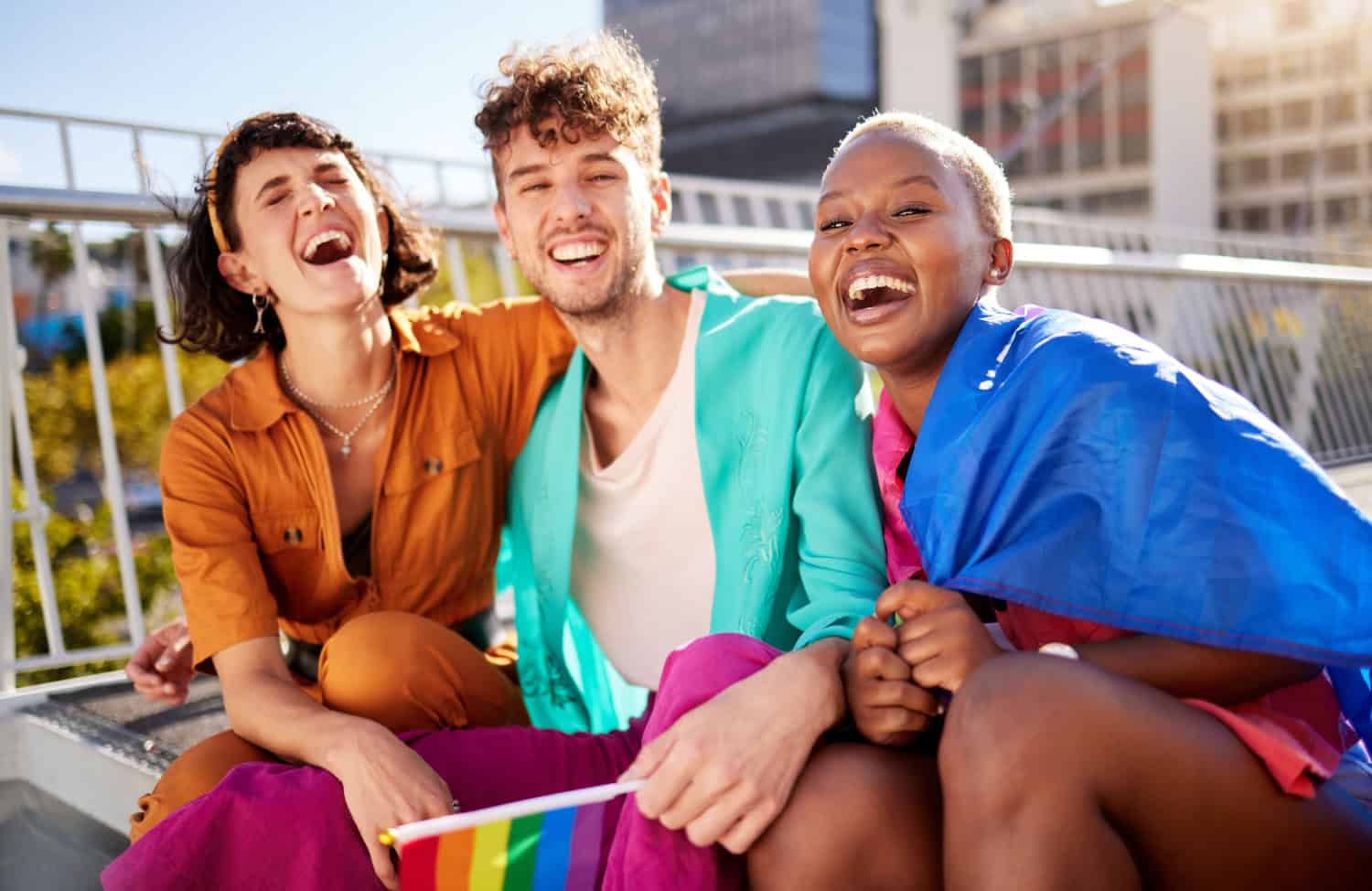
Research across Canada continues to show a clear pattern: 2SLGBTQI+ individuals face significantly higher rates of anxiety, depression, trauma, and substance use challenges than the general population.
According to 2024 Statistics Canada data, nearly 3 in 10 (29.7%) 2SLGBTQI+ people reported their mental health as fair or poor, compared to 9.1% of non-2SLGBTQI+ Canadians.
Studies also show queer and trans individuals are approximately 1.5 to 4 times more likely to experience mood or anxiety disorders.
Growing up without feeling fully safe to be yourself takes a huge toll. Researchers often refer to this as “minority stress.”
What does this type of stress look like in real life? It often starts in childhood when you’re treated differently in family settings, schools, locker rooms or church groups. By the teen years, you’re experiencing the stress of hiding yourself to stay safe, and by the time you’re an adult, you might have experienced full-on discrimination in the workplace, social settings or even the loss or denial of housing.
Learning early in life that openness may come with severe consequences changes how safe the world looks and feels.
Research shows that 77% of sexually and gender-diverse youth reported being bullied in the previous year, while 33% described their mental health as poor.
In Canada, 27% of 2SLGBTQI+ youth aged 15–24 met the criteria for a major depressive episode in 2022, while one in four reported suicidal ideation. Among heterosexual and cisgender peers, the rates were significantly lower.
Transgender and non-binary individuals continue to face some of the highest mental health risks in Canada. One study found that 54.7% reported fair or poor mental health, compared to 9.9% of cisgender respondents. Another Ontario survey found that 77% of transgender respondents had considered suicide.
Bisexual individuals, particularly bisexual women, also report disproportionately high rates of anxiety, depression, and mood disorders.
Statistics tell part of the story, but the lived experience behind the numbers is much harder to measure.
Substance use and emotional survival
Mental health struggles and substance use are often deeply connected.
For some people, substances become a way to deal with anxiety, numb feelings of shame or guilt, escape loneliness, or feel socially accepted. Sometimes these coping mechanisms become part of situations where connection and belonging are sought at the same time.
The numbers show us just how prevalent this is. Recent research suggests substance use among 2SLGBTQI+ individuals may be 2 to 4 times higher than among heterosexual populations, while a 2024 Canadian study found that 59% of 2SLGBTQI+ individuals reported experiencing both mental health and substance use challenges concurrently.
Some studies indicate 2SLGBTQI+ youth may be up to 14 times more likely to develop substance use disorders than their heterosexual peers.
Bisexual men and women were also found to have particularly high rates of illicit drug and cannabis use. In Toronto alone, one study found that 36% of 2SLGBTQI+ adults smoked, compared to 17% of other adults.
These conversations can easily become oversimplified. Stereotypes appear quickly when discussing addiction within queer communities, but substance use doesn’t happen in a vacuum.
Two-spirit identity and indigenous inclusion
In Canada, the acronym 2SLGBTQI+ intentionally includes “Two-Spirit,” a culturally specific identity used by some Indigenous people to describe diverse understandings of gender, sexuality, spirituality, and community roles.
Two-Spirit identities are not interchangeable with Western LGBTQIA+ identities. They are rooted in Indigenous cultures, histories, and ways of understanding the world.
Colonization disrupted many traditional Indigenous teachings around gender and sexuality. The impact of that disruption is still felt today through intergenerational trauma, systemic inequities, racism, displacement, and barriers to care.
Indigenous communities in Canada continue to experience disproportionately high rates of mental health and substance use challenges as a result of these ongoing realities.
At Centres for Health and Healing, we recognize the significance of culturally safe care. Through our Indigenous Training Program, we work toward developing an environment where Indigenous and Two-Spirit individuals feel respected, understood, and supported throughout the recovery process.
Why inclusive care matters
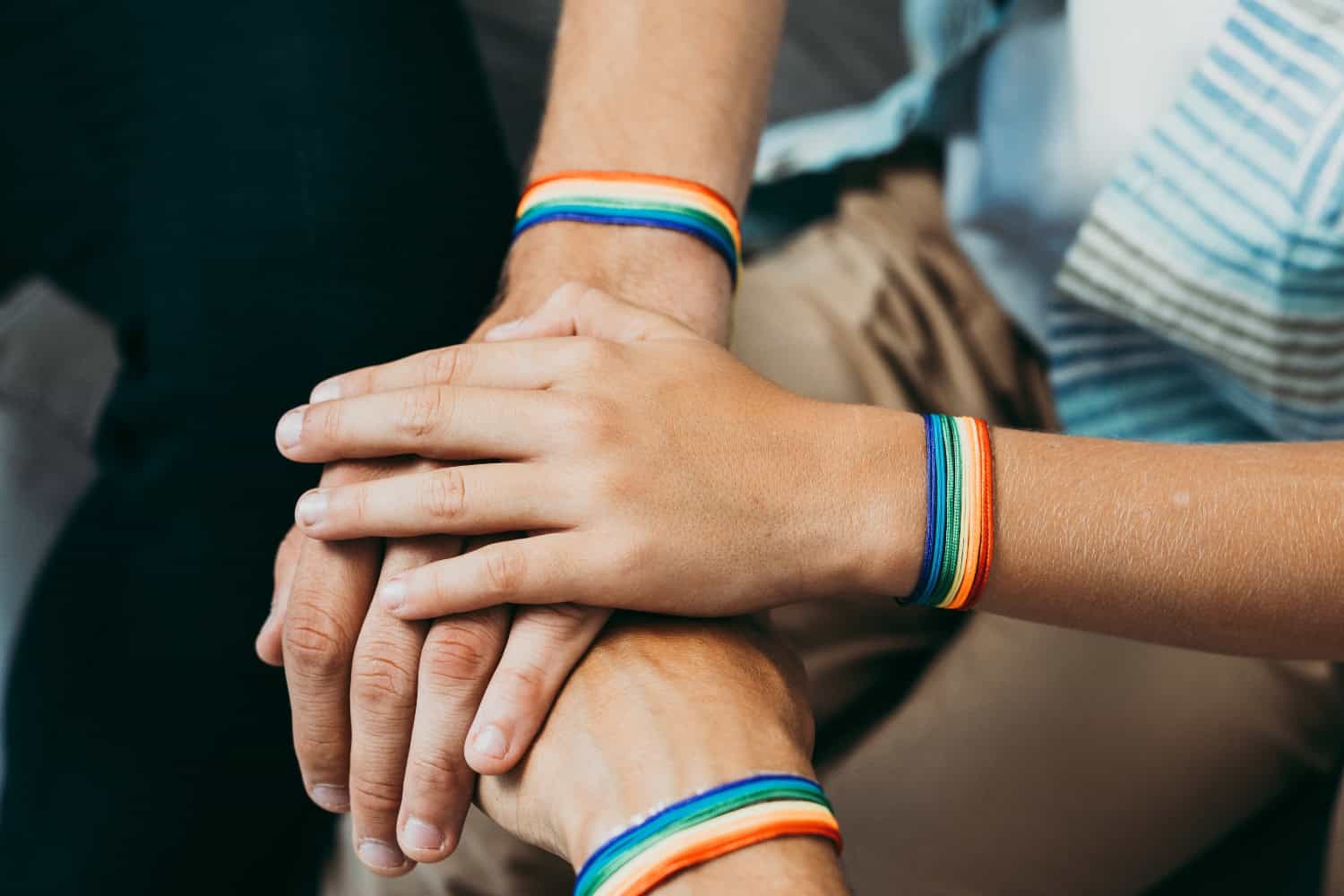
Many 2SLGBTQI+ individuals delay seeking any kind of help for far longer than they should.
It’s not because they don’t want support, but because they don’t know whether the space will feel safe.
That’s trauma, and over time, it takes a huge toll on your mental and physical health. Recovery becomes much more difficult when you’re focused on protecting yourself at the same time. This is because true healing requires vulnerability, and vulnerability is impossible without safety.
It’s difficult to open up in therapy when part of you is still trying to figure out whether the room is emotionally safe.
At Centres for Health and Healing, we understand that emotional safety is not a “bonus” in treatment — it is 100% foundational.
We know that 2SLGBTQI+ individuals are far more likely to engage honestly in therapy when they feel respected rather than judged or shamed.
Our approach is based on trauma-informed care, compassion, and respect for lived experience. We recognise that recovery isn’t simply about stopping a behaviour or treating symptoms. It is also about repairing trust, connection, stability, and self-worth because mental health care should never come with the feeling that you have to prove, defend, or hide who you are.
Centres for Health and Healing continues our commitment to establishing inclusive, affirming spaces where 2SLGBTQI+ people can access support for mental health, trauma, and addiction with dignity and compassion.
Because recovery becomes possible when people feel safe enough to be fully seen.
If you or someone you love is struggling with substance abuse or mental health issues surrounding homophobia, transphobia or biphobia, reach out for a confidential conversation with one of our team members. We see you. You don’t have to do this alone.