


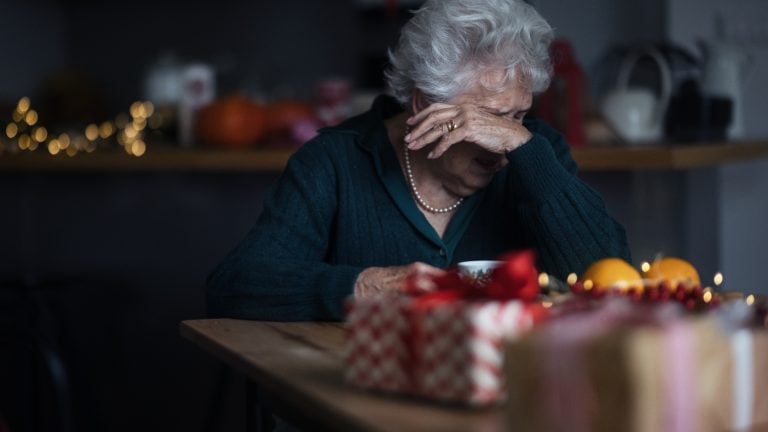
Once, I heard someone describe their holiday like this:
“I laughed through dinner, helped clear the plates, then cried in the bathroom before dessert.”
They said nothing “bad” had happened. No arguments or anything like that. It was just a day where everything they had been holding in finally came out, and they felt like they had to hide it from everyone else.
They told the story almost apologetically, like they were checking to see if it made sense. Like enjoying the evening should have cancelled out the part where they felt upset. As if those two things were not allowed to exist at the same time.
They do, though.
During the holidays, feelings tend to overlap in ways that don’t make logical sense at first glance. You can feel close to people and still feel lonely. You can feel grateful and miss what is no longer there. One does not undo the other.
When that happens, some people assume it means something is wrong. That the sadness must be pointing to a problem, or that they should try harder to feel differently. But sometimes it simply means you’re paying attention. Memory has a way of surfacing when the year slows down.
The holidays make this harder to ignore with shared meals and old traditions. They pull the past into the present. Even in moments that feel genuinely warm, what has been lost can rise alongside it.
This simply means the season is honest.
We’re here to help.
Contact us today for a no-obligation conversation with one of our professionals.
Why the holidays bring everything to the surface
Holidays compress time. They invite us to reflect, even if we don’t want to. Traditions, familiar smells, music, and rituals have a way of doing this.
For someone who has lost a loved one, the empty chair at the table can feel unbearable. Someone in recovery may see how the season highlights how much life has changed. For others, the holidays bring reminders of family dynamics or parts of themselves they are still learning to let go.
It doesn’t help that modern culture frames this season as something that should feel joyful. Social media and advertising reinforce the idea that happiness should come easily at this time of year. When that does not happen, people may think something is wrong with them.
Nothing is wrong with them. Here’s the truth:
Holidays simply magnify emotional contrast. Joy does not erase grief, and grief does not cancel joy. Both can exist at the same time.
The pressure to look like you’re fine

One of the hardest parts of mixed emotions during the holidays is the pressure to hide them. Many people feel they need to choose a single emotional lane and stay in it. Either they are grateful and cheerful, or they are struggling and withdrawn, and they cannot be both.
This pressure can be especially strong for people who are used to holding things together. Those in recovery or those managing mental health issues often feel a responsibility to protect others from their own feelings.
So they show up, smile, and join in. But inside, they feel disconnected or overwhelmed.
Pretending to feel a certain way is exhausting. It means always watching yourself. It also reinforces the idea that difficult feelings aren’t welcome, especially during a season that’s supposed to be positive.
A better approach is instead of asking how you should feel, try noticing what you’re actually feeling.
Grief doesn’t always look like grief
Grief is often associated with death and loss, but it’s more than that. We grieve the end of relationships, changes in ourselves, lost years, unmet hopes, and parts of life that are gone.
During the holidays, these kinds of grief can appear unexpectedly. Someone might feel sad about a family that has changed. Someone else may grieve time lost to illness or addiction. These losses might not be visible to others, but they’re real.
Also, grief does not always look like sadness. Sometimes it shows up as irritability or a sense of being slightly removed from what’s going on around you. It can sit there quietly while you’re laughing or talking, which is part of what makes it so disorienting.
Making room for grief means noticing it without immediately trying to fix it or push it out of the way. Letting it be there can actually make it easier to stay present, rather than harder.
Joy doesn’t cancel out what hurts
Many people think admitting grief takes away from joy, but the opposite is often true. When we’re honest about our feelings, moments of joy feel more real.
Joy that depends on hiding pain is fragile and hard to maintain. Joy that comes with honesty is steadier and easier to trust.
For someone in recovery, joy may look different than it did before. It may be quieter, but that doesn’t mean it’s less valuable. Letting joy come naturally and allowing grief to exist without making it bigger creates emotional flexibility.
When the body feels the season before the mind does
Emotionally complex seasons put extra stress on your nervous system. Social events and changes in routine add to this stress.
For people who have lived with trauma or addiction, the nervous system is often already on high alert. The holidays add more noise to that system with more expectations and disruptions. It can show up as anxiety or a strong urge to pull back from everything.
Simply knowing this can soften the self-criticism. Feeling overwhelmed at this time of year is the body responding to a lot at once, even if you can’t always explain why.
Self-care is especially important. Rest and routine can help you feel safer and better equipped to deal with the stressors.
Letting yourself tell the truth, even if only to yourself

One of the most helpful things you can do during the holidays is to be honest with yourself. This does not mean analysing every feeling or sharing everything with everyone. It means noticing your own experiences without minimising them.
You might feel warmth and sadness at the same time. You might enjoy some traditions but dread others. Naming these feelings to yourself can help ease the tension that comes from trying to feel just one way. Say to yourself, these two things can be true at the same time.
When it feels right, being honest with other people can also help. Simple statements like “This time of year brings up a lot for me” is a good start without needing to explain everything.
Why comparing your experience makes it all harder
Comparing yourself to others has a way of making the holidays heavier than they already are. Measuring your own feelings against what you see in other people rarely brings clarity, especially when most of what you’re seeing is carefully edited.
Social media will show the highlights: smiling faces, full tables, matching outfits, and moments that look perfect. What it does not show are the arguments before the photo or the grief someone carried into the room.
When you scroll through that kind of filtered “joy”, it’s easy to assume everyone else is coping better. The kindest thing you can do for yourself during the holidays is step back from comparison altogether, which may mean taking a break from social media.
Letting your feelings be what they are, without constantly checking them against someone else’s highlight reel, helps you stay connected to yourself.
Redefining the holidays

For some people, distress comes from trying to make the holidays exactly like they used to be. This can be especially hard when life has changed.
Recovery means letting go of strict expectations and allowing new meanings to develop.
Traditions can be changed, paused, or even replaced. There’s no rule that says holidays have to look a certain way to matter. Sometimes that looks like doing less, not more. Letting the season be quieter than it once was, and trusting that this version still counts.
You can learn to sit with more than one feeling at once.
If joy and grief are both present this season, neither one has to go away. Both are part of being human.
How can Centres for Health & Healing help?
Centres for Health & Healing offers a supportive space where you can slow down and talk honestly about what you’re going through. There’s absolutely no pressure to feel a certain way or to have everything figured out.
Our team provides thoughtful clinical support and care that’s tailored to you. We help you make sense of your emotions and find peace, especially during times that feel confusing.
If the holidays are bringing up more than you expected, you don’t have to manage it on your own. We are here to help.
Contact us today to start the conversation.