


Grief is one of the most profound and life-changing human experiences that most of us will go through at some stage.
Someone wise once said that ‘’grief is common’’, yet its impacts are anything but.
Many people turn to different forms of coping to help them deal with the loss of a loved one, including social isolation, keeping busy and distracted through work or other activities, and, for some, substance use.
Grieving hearts, risky choices
Grief can take many forms, and each of us processes and navigates loss in our own unique ways, depending on our attachment styles, relationship to the person we lost, and the circumstances surrounding the death.
People grieve for many reasons, including the death of a loved one, the end of an important relationship, a change in life roles, or even the loss of self-identity and purpose.
While grief itself is natural and necessary, how we process and respond to loss can profoundly shape the trajectory of our lives.
For some, the overwhelming, oceanic pain of losing someone they love can lead to risky choices, especially when substances begin to fill the void where support, compassion, and purposeful healing are most needed.
In Canada alone, the conversation around addiction and mental health has shone a spotlight on an important, often overlooked truth: grief and substance use are deeply intertwined.
Understanding this association is a crucial step toward both prevention and recovery for individuals navigating loss, no matter its form.
We’re here to help.
Contact us today for a no-obligation conversation with one of our professionals.
How loss can fuel addiction
When grief starts to feel unmanageable, many individuals turn to substances like drugs or alcohol – not out of recklessness, but in a desperate attempt to cope with the reality of the loss.
Substances can provide a temporary sense of relief for mourners.
Alcohol and drugs can help to numb the emotional pain of grief and offer a fleeting escape from the profound shock of forever losing someone we love.
This pattern is known as self-medication. While it may seem effective and helpful in the moment, these behaviours can quickly spiral into an unhealthy cycle:
- Grief begins to resurface.
- The individual uses a substance to alleviate or dull the pain.
- The relief comes, but it is temporary.
- The underlying grief remains unprocessed and unacknowledged.
- Dependence and emotional turmoil start to become embedded patterns.
When grief becomes too heavy to bear

Grief is not a linear experience. Emotions can ebb and flow in unpredictable ways.
At times, it can feel like your world has become almost surreal in the wake of loss – as if you have been transported to another dimension where everything feels strange and unreal.
Many people describe this experience as if they are walking around outside their bodies. This response is incredibly common in grief and is a form of dissociation in which you may feel detached from yourself and your surroundings.
Other common emotions in grief include profound sadness, guilt, numbness, anxiety, restlessness, or difficulty sleeping and concentrating.
For some, grief can become persistent and profoundly intense, which may indicate they may be experiencing complicated grief or prolonged grief disorder.
This type of loss involves intense, long-lasting symptoms of grief, combined with issues with daily functioning and ongoing problems in coping with life that continue for six months or more after the loss.
What you can do if you think complicated grief may be an issue
If you think you or someone you love may be experiencing complicated grief after the loss of a loved one, support and help are available.
You are never alone in this, and it’s okay to reach out and ask for help.
Grief is one of the most difficult experiences we will ever go through in life, and sometimes we need the support of others to help us navigate the pain of loss and learn the tools to help us get through the more difficult moments.
Speak to one of our trained professionals today for gentle support and guidance.
Healthy steps to healing
At Centres for Health and Healing, we support individuals through the process of grief and loss, offering the safety and stability many mourners need, especially in the beginning.
Our multidisciplinary team of trained clinicians and addiction specialists increasingly recognize that addressing grief and substance use together is essential for meaningful, lasting recovery.
Therefore, we work with you and your loved ones to create a bespoke program tailored to your unique grief experience, preferences and goals, helping you to honour both your grief and your growth over time.
The hidden cost of avoidance
Although it can be tempting and understandable, avoiding or numbing your grief doesn’t resolve it.
In fact, it often intensifies the struggle as grief is an experience that must be witnessed and acknowledged by safe, supportive others.
Relying on substances may seem helpful in the short term. Still, over time, they can increase your tolerance levels (putting you at higher risk of addiction).
It can also make emotional regulation more difficult, which may strain your relationships and, ultimately, deepen feelings of isolation and loneliness.
What may have begun as a way to cope with the pain of loss can become an additional source of struggle if left unchecked, adding new layers of complexity to an already complicated journey.
Pathways to healing in Canada: Integrated care

Recovery from grief-related substance use is not about removing the thing you have been using to cope, in this case, substances.
It’s about getting curious with healthier alternatives and building helpful, sustainable ways to process and develop the capacity to hold your grief without needing to numb or distract through unhealthy patterns of behaviour.
Many rehab centres in Canada now provide integrated care for individuals navigating grief, addressing both the emotional aspects of loss and substance use simultaneously.
At our treatment centre in Toronto, some of the approaches we use to support grievers include:
- Trauma-informed therapy: Our counsellors and therapists provide a safe, compassionate space to help you explore and process your loss at a manageable pace, without judgement or pressure. Grief is a boundary violation and creates a lot of trauma that gets stored in the body. Having a safe space to process your experience can help discharge some of the traumatic energy of loss in a safe, gentle way.
- Evidence-based modalities: Therapies such as Cognitive Behavioural Therapy (CBT) help individuals identify and explore unhelpful thought patterns and beliefs, allowing them to develop healthier responses over time.
- Emotional regulation skills: Grief dysregulates the nervous system, triggering a range of emotional and somatic responses. Learning to regulate your emotions, sit with difficult feelings, tolerate discomfort, and gradually regain a sense of control over your emotions can be both helpful and empowering for mourners.
Gentle steps toward recovery
While professional help is often essential, particularly in cases where complicated grief may be an issue, there are gentle, self-compassionate steps you can take to begin the healing process:
- Acknowledge and name your grief. Notice what emotions come up. Are these emotions trying to tell you something? What might this feeling want you to know?
- Allow space for a wide range of emotions, even for a brief moment. By learning to regulate your emotions, you create space for a broader range of feelings. You can always come back to a helpful resource (such as deep breathing or slow movement) if things become overwhelming.
- Reach out to trusted friends, family, or professionals. As mentioned, grief wants to be witnessed. Therefore, you must reach out to your support network as much as possible, especially during tough moments.
- Develop simple routines to bring structure to daily life. This may include grounding activities like walking, drawing, mindfulness, or creative expression.
Healing from grief does not mean forgetting the person you love or “moving on.” Grief is not something that needs to be fixed because nothing is broken.
Instead, it is about learning to carry your loss in a way that no longer controls your life, but becomes a part of your story.
Next steps
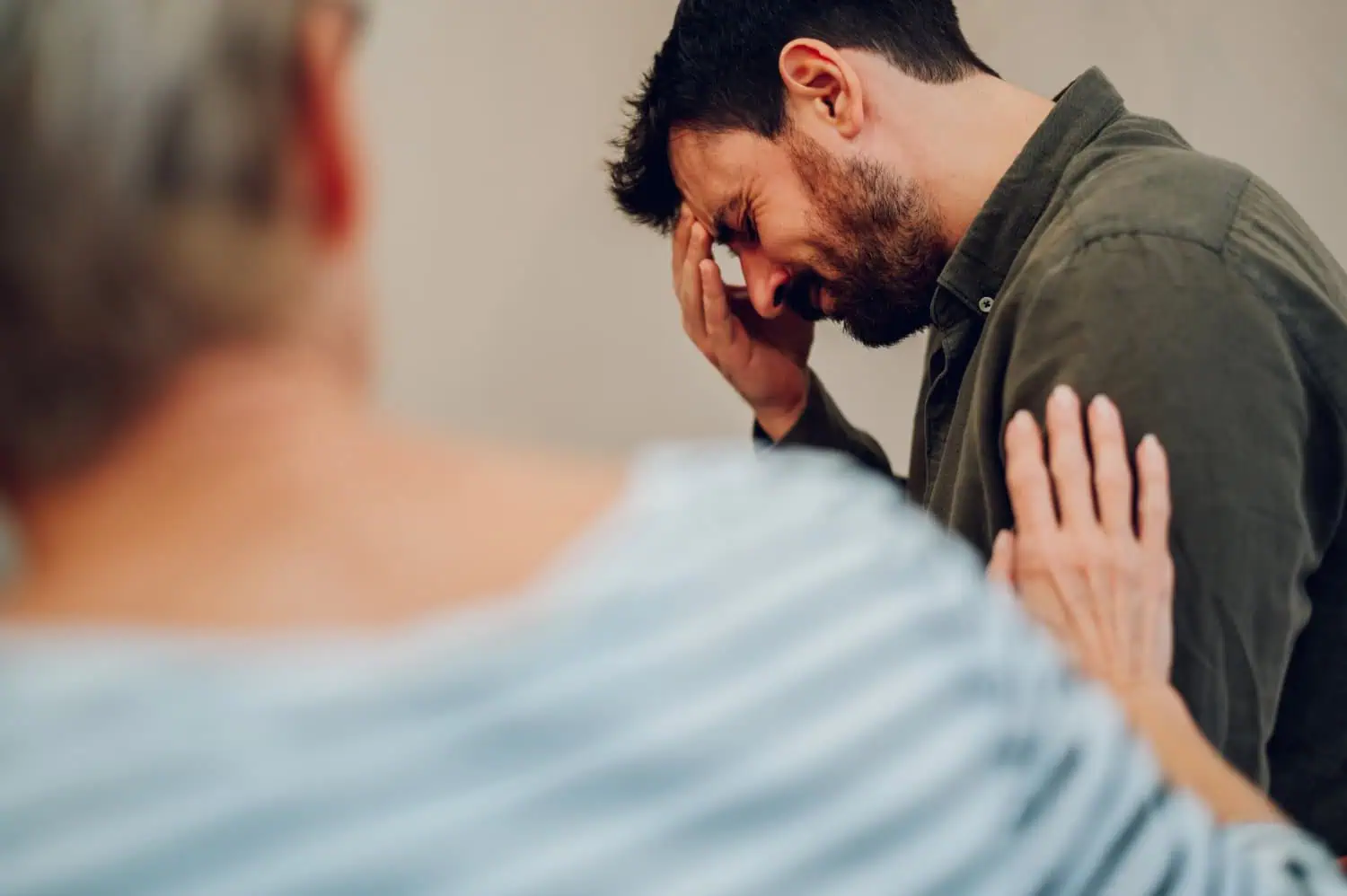
If you or someone you care about is using substances to cope with loss, know that this response is not a sign of weakness; it is an attempt to survive something deeply shocking and painful.
However, there is another way forward.
With the right support and care, it is possible to process your grief safely, reduce reliance on substances, and rebuild a sense of stability, hope, and purpose, allowing you to honour both the person you love and your growth.
No fixing, no emotional bypassing – rather, developing the capacity to sit with two different truths: you will forever miss the person you lost, and it’s okay to allow space for joy and growth to come back into your life over time.
For further support and resources, contact our treatment centre in Toronto today or speak to our professional team about your options.
We are here to walk this path with you – one gentle step at a time.