



If you’re here because you are worried that your loved one may have a problem with substance use (or even another type of addiction like gaming or compulsive shopping), you’ve landed in the right place.
First of all, we know how difficult and worrying it can be to find ways to support not only the person you love through an addiction but also yourself.
Many families neglect their own health and well-being as their focus is solely on supporting their addicted brother, sister, child, parent, or even partner.
But the fact that you are seeking ways to take care of yourself during an incredibly stressful and traumatic time shows your level of commitment and awareness of an issue that is often much easier to ignore, deny, or minimise to cope.
You’re not alone. No, really, you’re not.
So much of the content we read nowadays seems almost poetically predictable – with paragraphs ending similarly, the most popular being, ‘you are not alone’.
But you’re really not.
So many families out there experience trauma, grief, and a whole range of other challenges due to a loved one’s addiction.
This disease is often described as an individual illness, when, in reality, it is very much a family and even community disease.
Yes, there may only be one person using substances or other self-sabotaging behaviours, but the emotional, psychological, and relational impacts spread far beyond the individual, affecting all members of a family unit in unique ways.
This article is intended to help you understand how addiction may be impacting your family and to highlight signs that you may also need support, which many families overlook but are essential for your own happiness and well-being.
This is about you, your experienc,e and how you can get the things you need to cope with a situation that is often very difficult and anxiety-provoking.
So, let’s get into it.
We’re here to help.
Contact us today for a no-obligation conversation with one of our professionals.
How addiction impacts families
As we briefly touched on earlier, addiction is not just a disease that affects the person actively involved in substance use.
It can also have a profoundly detrimental effect on those around the individual, particularly family members, friends, and even those in the community.
When addiction becomes a problem in a family, it has this quiet yet unscrupulous way of reshaping the lived experience of every person involved.
Some roles may shift or dart back and forth. Communication erodes where conversations can feel challenging and even triggering. Trust and emotional safety dissolve into the ether.
Many families that come to our rehab centre in Canada say they often feel like they are ‘’walking on eggshells’’ with their loved one in an attempt to avoid conflict, stress, or hold everything together.
Silent suffering

There is a lot of silent suffering for families dealing with a loved one’s addiction.
Sleepless nights. The feeling of deep dread and impending doom each time the phone rings past a particular time in the evening.
Is this going to be the day it happens, you wonder, secretly hoping it’s your best friend calling to tell you about that dress she just bought hanging in the shop window.
Masking
There’s also a lot of masking, where many families pretend to be okay, pretend not to notice the half-drunk bottle of red wine between the wardrobe shelf, where long-sleeved clothes do a good job of hiding the stained glass flute.
The way your brother walks through the front door, and no longer greets you with a kiss on the cheek, as he has managed to catch yet another cold or flu for the tenth time in six months, and doesn’t want to ‘’pass it on’’.
But really, you know he’s hiding the smell of beer on his breath.
Grief
Then, there’s the grief that comes with living with the idea that the person you love must be suffering so deeply that they have to literally drink, snort, or inject their everyday reality away just to get through the day.
Grief expert David Kessler defines loss as the change we didn’t want, and as basic as this idea might sound, many families struggling with a loved one’s addiction are inherently having to restructure their lives around this new reality.
A reality where their spouse, mum, dad, or little brother or sister’s entire life is dominated by that red bottle of liquid (or other substance).
Being in a family where addiction is a problem is incredibly grief-inducing.
It’s the change we never wanted or asked for, a complete violation of our boundaries and the version of the person we thought we always knew, but now feel we may have lost to addiction.
But it’s also an expression of how deeply we love the person, no matter what, come what may. And it’s important to remember that it’s this very love, this unconditional care, that brought you here, to this article.
Now that we have some idea of how addiction impacts families, let’s explore some other signs you may need support.
Struggling with the changes addiction brought to your family
Walking on eggshells, as mentioned above, is a common occurrence for families living with a loved one’s addiction.
This is often driven by a deep need to avoid causing further shame, blame, or, indeed, feeling like you might be the reason your loved one just picked up the bottle at that very moment.
Voicing your concerns and fears to a loved one struggling with addiction is always going to be a risk.
After all, addiction is primarily caused by emotional dysregulation, among other things, so the last thing you want to do is make things worse by bringing up the very thing that causes them to become more dysregulated, defensive, or angry.
Because of these challenges, you may struggle with:
- Chronic stress and anxiety due to emotional repression, conflict, or having to stay silent or minimise your own suffering.
- Emotional exhaustion and fatigue as you work hard to keep it all together for the sake of your loved one.
- Financial strain, as you may be the only one contributing to the household, as your loved one’s functioning is diminished due to substance use.
- Constant conflict, secrecy, or emotional withdrawal. Keeping a loved one’s addiction to yourself can cause a range of issues, including friendship breakdowns, work issues, and other relational challenges.
Many families end up adapting to the chaos at home without even realising how much they are sacrificing their health and well-being to survive.
Feeling responsible for your loved one’s addiction
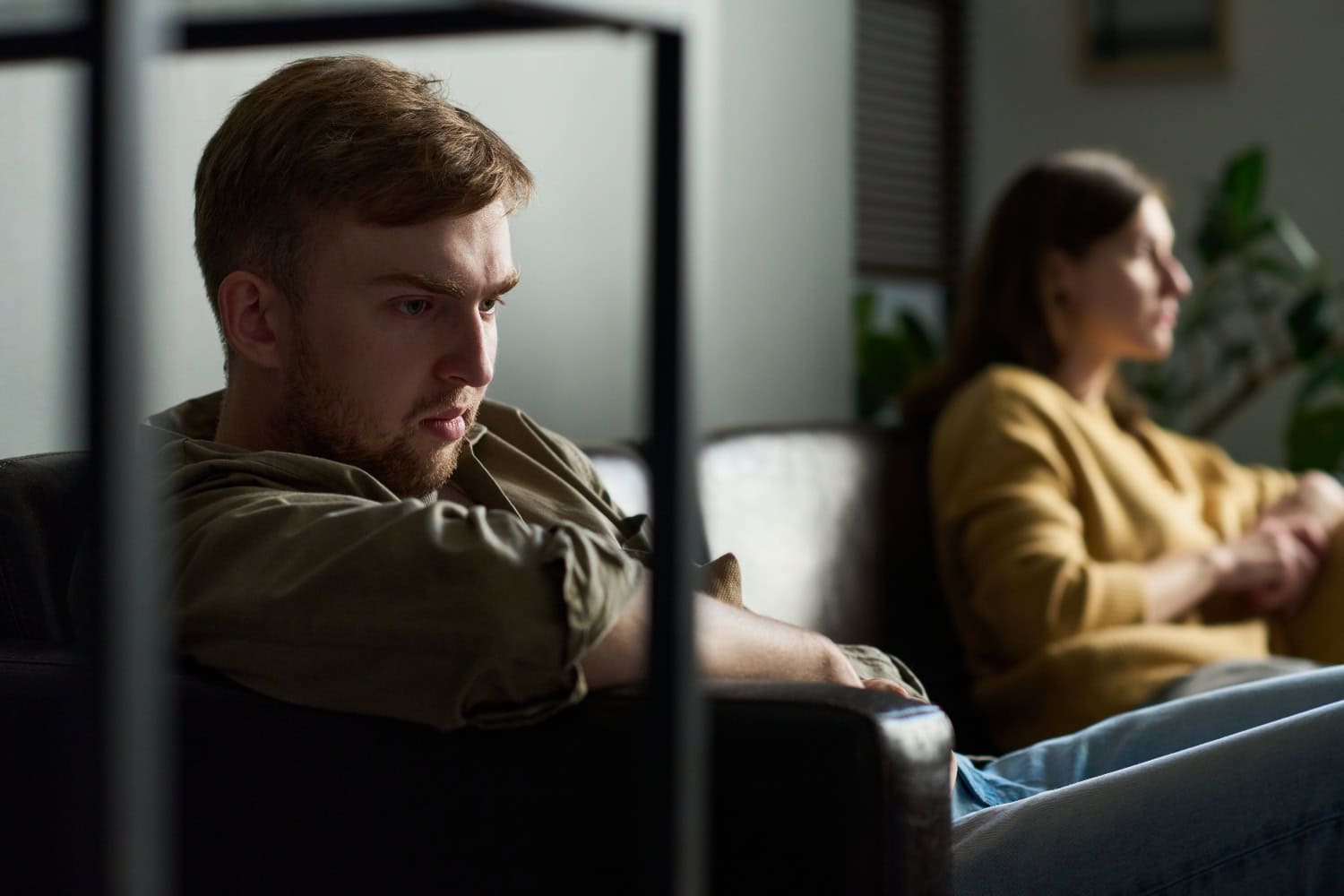
This is a big one for families.
The profound guilt that comes with watching your loved one suffer from substance use can cause many families to experience feelings of helplessness, shame, self-blame, guilt, and anger, to name just a few.
Somewhere down deep, there’s this gnawing feeling or continuous narrative – Was I a bad sister? Parent? Partner? Friend? Is that what caused all this?
Was it because I didn’t share that sprinkled ice lolly with my brother when we were kids, and it forever traumatised him and made him feel like he was somehow undeserving of nice things, and now he uses cocaine to cope?
Was I an insensitive daughter who caused my mum to drink more because I was a selfish child who cared only about my own needs and wants?
The question marks seem endless.
But as research tells us, addiction is often, if not almost always, fueled by deep, unresolved trauma that leaves some permanent imprint on the nervous system, causing emotional dysregulation, among many other challenges.
Repeated experiences of adversity, like childhood abuse, neglect, early loss, exposure to domestic violence, and attachment disorders.
It may help you to know that these are the types of experiences that can really cause emotional suffering, leading many to self-medicate with substances to cope.
As well as guilt, many families also describe:
- Feeling responsible for their loved one’s choices and behaviours.
- Suppressing their own needs to keep the peace.
- Oscillating between hope and despair daily.
- Grieving the version of their loved one before addiction took hold.
When left unchecked, this type of emotional strain can have severe consequences for families, including various mental and physical health issues.
Understanding the signs and seeking the right type of support can help you avoid these complications whilst still supporting your loved one.
Other signs you may need support include:
- Feeling constantly anxious, emotionally numb, or on edge.
- Struggling to sleep or relax.
- Feeling isolated or unable to open up about what’s happening.
- Experiencing severe guilt when setting boundaries, even though you intend to make things better, not worse.
- Feeling consumed by resentment, exhaustion, and worry.
- Losing sight of your own identity, needs, or sense of happiness and joy.
- Feeling alone in the situation, like no one else cares or understands.
These are not signs that you are weak, selfish, or doing anything wrong; instead, they are indicators of prolonged worry, stress, and emotional overload.
Anyone with even a semblance of empathy and compassion would feel the same as you do, or at least something similar.
How children react to addiction in the family
As most of us with young children or nieces or nephews in the family know, kids tend to react to and process experiences and events differently than adults do.
In families impacted by addiction, children often take on roles way beyond their years.
They may become caretakers to one parent or both, peacekeepers, or “the dependable, strong one.” Meanwhile, their needs are often neglected or overlooked.
Children have this unique way of looking resilient on the surface, but the impact of this type of early stress and adversity often comes at a cost later in life.
For instance, adult children of addiction often struggle with the following:
- Trouble trusting others.
- People-pleasing or perfectionism.
- Depression, anxiety, or chronic relational challenges.
- A profound fear of abandonment or conflict.
- Substance use disorder or other addictive behaviours.
Children with this type of early trauma often develop more profound empathy than their peers and can usually read people very well due to their early experiences.
This is called pattern recognition, in which the child had to learn to predict their parents’ fluctuating moods, needs, and expectations to survive.
Support from a compassionate, experienced professional can help you understand and interrupt these patterns so that you can begin experiencing a new way of living and being.
You definitely do not need to carry this alone.
If addiction has affected the people you love, remember, your pain, your experience matters as much as anyone else’s.
Seeking support does not mean you are betraying your loved one’s trust – it is a deep act of care for yourself and your family as a whole.
There are many different support programs that treatment centres like ours provide to families struggling with addiction.
Here’s what you can expect from our family support program at Centres for Health and Healing:
- Family therapy with one of our specialist counsellors, which involves trauma-informed counselling and support to families navigating a loved one’s addiction, helping to improve communication and resolve conflicts in healthy, constructive ways.
- Psychoeducational programs that provide education and understanding around addiction symptoms, emotional support, and signs of relapse.
- Individual therapy with a trauma-informed therapist, which helps you explore your feelings, beliefs, and experiences in a one-to-one setting, enabling you to speak openly about your experience without worrying about hurting other people’s feelings or creating further conflict.
Family support in Toronto

The most important thing for you to remember here is that you deserve guidance, clarity, and acknowledgement, a life that goes beyond merely making it from one day to the next.
At Centres for Health and Healing, we know just how daunting it can feel to make that first call for help, but it can also be the first step toward not only healing the person you love, but also yourself.
We provide comprehensive family therapy and support in Toronto for individuals and families seeking recovery from the effects of substance use and other types of dependencies, including work, sex, and food addiction.
Contact our residential treatment centre in Toronto today to learn more about our family support programs and how we can help.
Remember, we are in this together, one small step at a time.