


Recovery from addiction or other emotional difficulties is often looked upon as an individual journey.
In reality, particularly within structured residential care, healing is rarely a process that occurs in isolation.
For many people entering treatment at a specialist centre, the presenting concerns are deeply interwoven with relational dynamics.
This often includes long-standing communication patterns, unhelpful beliefs, and family systems that have adapted, often unconsciously, to distress over time.
In treatment, practitioners often assess these dynamics through structured family interviews or systemic assessments to customize family involvement strategies effectively.
This ensures interventions are both personalized and impactful.
In a treatment environment such as ours, recovery is understood not only as symptom stabilization or behavioural change but as a broader process of restoring psychological and relational coherence.
Family involvement, when carefully structured and clinically guided, can be a critical component of that process.
This is why you may find that most treatment centres in Canada usually offer some form of family support as part of the treatment plan.
The role of family support in recovery
When a person develops problematic patterns of substance use, emotional dysregulation, or ingrained mental health difficulties, the impact is rarely contained within the individual alone.
Families often adapt around the presenting difficulties, which can often look like accommodating certain behaviours, sometimes by withdrawing, and at other times by assuming roles that sustain short-term stability but inadvertently maintain long-term dysfunction.
Over time, these adaptations can become deeply entrenched.
For instance, what begins as a response to a crisis can evolve into a relational pattern that feels normal, even if it is no longer healthy or functional.
In this context, recovery requires more than individual change. It requires recalibrating the relational environment in which that individual exists.
We’re here to help.
Contact us today for a no-obligation conversation with one of our professionals.
The family system is part of the clinical picture
Modern trauma-informed and systemic approaches recognize that family systems can contribute to and be affected by the development of addiction and emotional difficulties like anxiety, depression, or chronic trauma.
Common patterns we see at our treatment centre in Toronto include:
- Over-functioning and under-functioning roles within the family system.
- Emotional avoidance or minimization of distress.
- Enabling behaviours that unintentionally reinforce compulsive behaviour and/or symptoms.
- Communication patterns shaped by long-term uncertainty or crisis management.
- Unresolved relational ruptures that predate the onset of clinical symptoms.
These patterns are not indicative of blame or even failure.
Instead, they reflect adaptive responses to sustained psychological strain and pressure within the system.
Effective treatment acknowledges this complexity without pathologizing the family or making them feel responsible in any way.
Healing relationships alongside the individual

One of the most important distinctions in family-inclusive support programs is the difference between involvement and responsibility.
Families are not asked to become clinicians or mental health experts, nor are they positioned as the cause of their loved one’s difficulties.
Instead, they are compassionately supported in understanding how relational dynamics can influence recovery and in participating in a more structured, healthy way.
This process often involves:
- Re-establishing communication that is direct, clear and emotionally regulated.
- Addressing deeply ingrained (sometimes unconscious) patterns of over-involvement or emotional withdrawal.
- Learning how to support recovery without reinforcing dependency or avoidance.
- Rebuilding trust and communication after periods of instability or rupture.
- Developing shared language around relapse risk, triggers, and progress.
In many cases, this process is as significant as the individual’s therapeutic work, as we cannot fully heal in isolation.
Those in recovery need the support of others to help mirror progress, lived history, and the characteristics that make a person the unique and capable individual they are.
Sometimes relatives and loved ones can act as a mirror in this context, reflecting aspects of the self that can only be found in connection with others.
The emotional impact on families
Families are often managing their own strain by the time a loved one enters treatment.
This may include prolonged stress, uncertainty, fear, anxiety, frustration, and, in some cases, emotional exhaustion or trauma responses related to repeated crisis cycles.
Recognizing this is essential.
Family members often support loved ones without the opportunity to process their own experiences first, so structured involvement can really empower and reassure them in their role.
Structured family involvement in residential treatment

At Centres for Health and Healing, family support is typically integrated in a carefully staged and clinically structured way. This may include:
- Family education sessions focused on the nature of addiction and co-occurring mental health conditions such as trauma, anxiety and depression and how they interrelate.
- Therapeutic family work, where appropriate, is facilitated by our onsite specialist clinicians.
- Psychoeducation around boundaries, relapse prevention, trigger awareness, and communication strategies.
- Structured updates to ensure clarity and reduce uncertainty.
- Guided reintegration planning towards the end of treatment.
The aim here is not to place additional pressure on family systems, they’ve already had enough to deal with – but to support them in becoming more stable, informed, and effective participants in their loved one’s recovery.
Recovery as a relational reorganization
Sustained recovery is rarely defined solely by individual symptom reduction or relief.
It is more accurately understood as a reorganization of the relational environment in which the individual exists and functions.
When families are supported in transitioning from reactive patterns to more conscious, structured engagement, the external environment becomes significantly more stable.
Evaluating outcomes such as improved communication, reduced relapse rates, or family functioning scores can help practitioners demonstrate the effectiveness of family-inclusive approaches and refine their strategies accordingly.
Trust can begin to rebuild. Communication becomes more functional. And the individual in treatment is no longer required to recover in isolation from the very system they return to.
A shared path forward
At its most effective, treatment does not separate the individual from their relational world – it helps re-establish a healthier version of it.
Family support, when carefully integrated, becomes not an auxiliary feature of recovery but a central component of its sustainability and capacity for nervous system expansion.
In this sense, recovery is not only about restoring one person’s health and well-being.
It is about the gradual repair of the relational system around them – so that recovery is not only achieved, but maintained beyond treatment.
Family therapy and support in Toronto
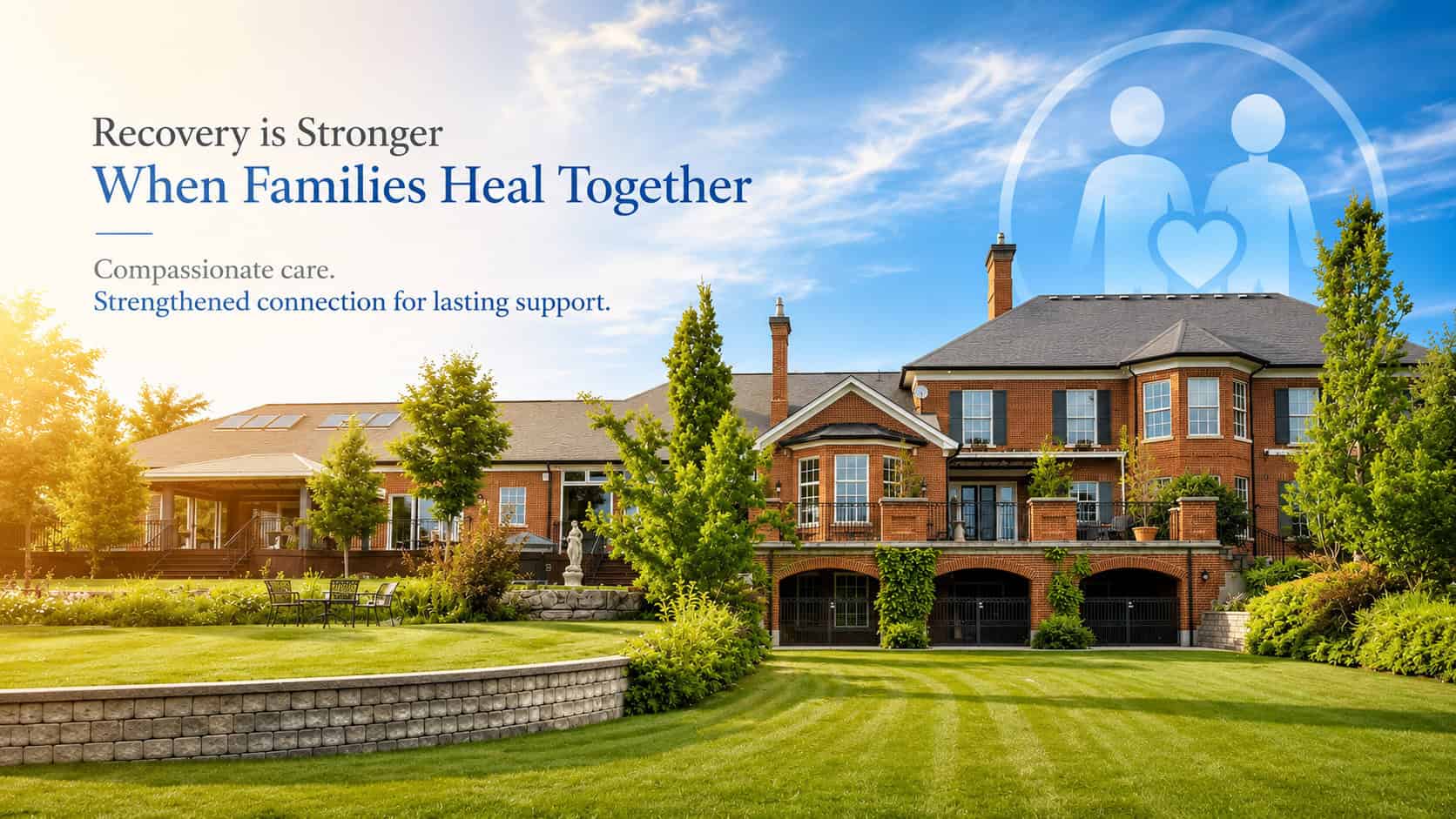
At Centres for Health and Healing, family therapy is a collaborative approach to counselling that addresses the dynamics and interactions within the entire family, rather than focusing solely on the individual.
Rooted in the belief that families function as interrelated systems, family support emphasizes that collective efforts and mutual understanding can cultivate greater resilience and transformation than what individuals can achieve in isolation.
This therapeutic process enables families to communicate more openly, resolve misunderstandings and resentments, and heal past emotional wounds together.
By strengthening these connections, family members become better equipped to support each other through challenges, making family therapy a vital component of long-term recovery and well-being.
At Centres for Health and Healing, our family therapy services are uniquely tailored to meet the cultural and personal needs of each family we serve.
We go beyond traditional talk therapy by actively guiding families through practical strategies for healing, growth, and positive change.
Our experienced clinicians provide individual support to every family member, ensuring a compassionate and inclusive path toward a healthier family life.
To learn more about our family support program in Toronto, contact our multidisciplinary team today, who will gladly help.
We look forward to guiding you and your loved ones through the recovery process and beyond, one step at a time.